The modern packet and the long shadow of Christmas
Today’s Terry’s range is marketed in the UK through Terry’s Chocolate Co, a subsidiary set up by Carambar and Co in 2019 and based in Finchley, London. That modern arrangement sits on top of a much older British habit: the Chocolate Orange became strongly associated with Christmas, and at one point it was estimated to appear in a tenth of British Christmas stockings. Global sales were reported to have doubled between 2019 and 2022, reaching 44 million units annually across markets including the UK, Ireland, Canada and others. Not bad for something many people still instinctively whack on the table like they are opening a very small safe.
York, chemists and confectionery with a proper backstory
The Terry’s name goes back to York, where the business that became Terry’s began in 1767 as a shop near Bootham Bar selling cough lozenges, candied fruit and sweets. Joseph Terry, trained as an apothecary and chemist, joined the Berry family confectionery business in the 1820s and gave the company the name that stuck. That chemist’s background matters because nineteenth-century confectionery was not just sugar and optimism. It was recipes, boiling, flavouring, preservation and distribution, all made more useful by railways and a growing national appetite for sweets that could travel without turning into a tragedy.
From York sweets to the Chocolate Works
Terry’s became part of York’s confectionery landscape alongside Rowntree’s and Cravens, making the city one of Britain’s great sweet-making centres. Sir Joseph Terry Jnr helped move the firm deeper into chocolate manufacturing, including production at Clementhorpe beside the River Ouse, and by the late nineteenth century Terry’s had become strongly associated with chocolate rather than the broader chemist-confectioner mixture of its early years. In the 1920s, Frank and Noel Terry commissioned the Art Deco Chocolate Works on Bishopthorpe Road, the factory later tied to the Chocolate Orange itself. Corporate histories like to make this sound tidy. York, chocolate, factories, family ambition and a lot of sugar were probably less tidy in real life, which is usually how good grocery stories happen.
The orange that became the main character
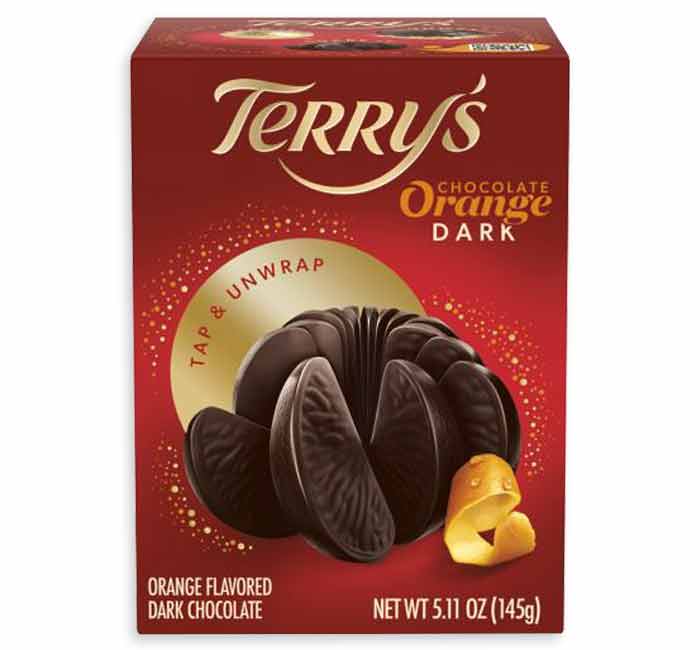
The Chocolate Orange was created in 1932 at Terry’s Chocolate Works in York. The classic description is simple enough: chocolate flavoured with orange oil, formed into an orange-shaped ball and divided into segments. That simple shape did a remarkable amount of work. It made the product feel like a little performance, not just a bar in a wrapper. The dark chocolate version belongs to that same family, though the specific story here is the wider Chocolate Orange line rather than a separately documented origin for this darker 145g box. In other words, the heritage belongs to the orange, and this one has simply put on a darker coat.
Why it still follows people across the Atlantic
For British shoppers in Canada, Terry’s Chocolate Orange often comes with a season attached to it. It is the thing at the bottom of a stocking, the object passed round after Christmas dinner, or the item someone’s gran kept “for later” and then produced with theatrical generosity in February. The dark version has the same familiar tap-and-segment routine, which matters more than it probably should. That is the odd power of British groceries abroad: they are not always grand, but they remember the small domestic ceremonies for you.
A quiet sign-off from the chocolate cupboard
Ownership of Terry’s has moved through several hands since the family era, and production is no longer the straightforward York story people might imagine from the old name. Still, the shape, the orange flavour and the ritual have carried on, which is why the box still makes sense on a Canadian kitchen counter in December, or frankly in July if standards have slipped pleasantly. The Great British Shop keeps that sort of memory within reach, with no need to explain to anyone why a chocolate orange needs to be tapped before it can be properly understood.