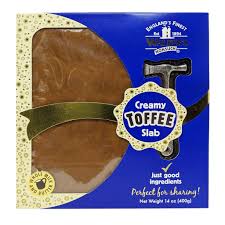
A Walker's story rather than a single-slab origin tale
There is no supplied product-level origin story for this particular slab, so the honest heritage here is the story of the Walker's Nonsuch name behind the modern packet. Walker's Nonsuch was founded in 1894 by Edward Joseph Walker and his son Edward Victor Walker. The business began in Longton, Staffordshire, which at the time was an independent municipal borough. Longton had historically been a market town in the parish of Stoke, and by the time Walker's was founded it had become the Borough of Longton, incorporated in 1865. That matters because this was not a vague countryside sweet-making tale. It was rooted in a busy industrial town with working people, shops, factories and the sort of appetite that makes toffee a sensible use of sugar and milk.
Longton, The Potteries, and proper factory-town sweetness
Longton later became one of the six towns that formed Stoke-on-Trent in 1910, but when Walker's Nonsuch began it still had its own civic identity. The wider area is known as The Potteries, long associated with pottery and ceramics, kilns, pot banks and a large industrial workforce. It is not hard to see why toffee found a place there. Toffee is sturdy confectionery. It travels well, keeps well, and does not require anyone to be precious about it. In a town shaped by hard work and heat, a slab of toffee feels more at home than something fragile and overdesigned. The little hammer on this pack somehow fits that mood rather neatly.
What “Nonsuch” is doing on the label
The name “Nonsuch” is an old English term meaning “none such”, carrying the sense of something without equal. It turns up in English history in grander places than a sweet packet, including the Tudor-flavoured world of Nonsuch Palace and other names intended to sound rather pleased with themselves. On a toffee label it has a pleasingly Victorian confidence about it. Not subtle, perhaps, but British confectionery has never been built entirely on modesty. The useful thing is that it also helps distinguish Walker's Nonsuch from other brands called Walker's. This is the toffee one, not crisps, biscuits, or anything else your brain may try to file under the same surname.
Why the hammer still makes sense
The slab format gives this toffee a different rhythm from a bag of wrapped sweets. You do not just open it and absent-mindedly eat one. You break it, portion it badly, argue gently over who got the bigger bit, and then pretend the uneven shards were part of a plan. It has a family-table feeling, the sort of thing that could appear at Christmas, in a grandparents' cupboard, or after Sunday tea when someone decided plates were unnecessary. The hammer is not only a gimmick. It turns the toffee into a small shared event, which is more than can be said for many things in the confectionery aisle.
A familiar thwack of home
For British shoppers in Canada, this is the kind of product that carries more memory than its plain description suggests. Creamy toffee slab, small hammer, Staffordshire name on the pack: simple enough, yet oddly specific. It brings back newsagent shelves, family parcels, school-holiday cupboards and the serious childhood business of watching an adult break a slab into pieces that were never quite equal. If it ends up in a Halifax kitchen being tapped into fragments with unnecessary ceremony, that feels about right. The Great British Shop is happy to leave the careful portion control to someone else.